Images | Kazakhstan Today
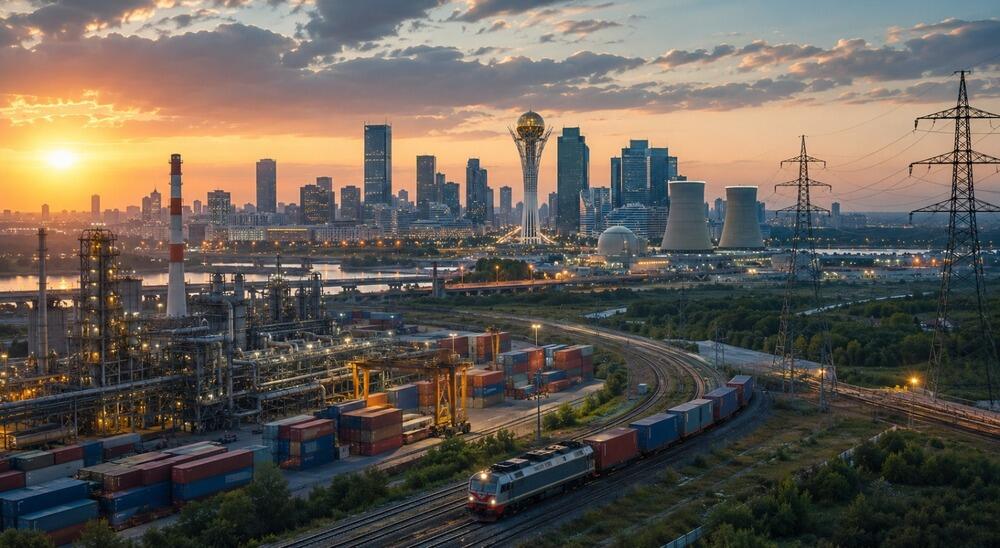
Kazakhstan has reaffirmed two key priorities of its state policy — strengthening energy security and accelerating industrial development. Major international agreements and new investment projects demonstrate the country's determination to create a long-term foundation for economic growth and technological modernisation.
Politics
The most significant political event of the period was the state visit of Russian President Vladimir Putin to Kazakhstan. Following talks with President Kassym-Jomart Tokayev, the two sides signed a package of documents, including agreements on the construction of Kazakhstan’s first nuclear power plant, cooperation in the oil and gas sector, and a joint statement outlining seven principles of friendship and good-neighbourly relations.
Of particular importance is the transition to the practical implementation stage of the Balkhash Nuclear Power Plant project, valued at approximately $16.5 billion. At the same time, Kazakhstan continued to expand cooperation with China, Central Asian countries and the European Union, reaffirming its commitment to a multi-vector foreign policy.
Further evidence of Astana’s efforts to diversify its foreign policy and economic ties was provided by the official visit of Cypriot President Nikos Christodoulides from June 2 to 4. The first visit by a Cypriot head of state in the history of bilateral relations included high-level talks and a Kazakhstan–Cyprus Business Forum attended by more than 70 business representatives from the two countries. The visit resulted in the signing of a package of agreements covering digitalisation, artificial intelligence, education, science, culture, sport and business cooperation.
Economy
The key economic development of the period was progress on the industrial park project in Kazakhstan’s Pavlodar Region, involving Chinese company Xinfa Group. Total investment in the project is estimated at around $15 billion.
The industrial park will focus on bauxite processing and the production of aluminium, electrolytic copper, soda ash, carbon materials, fluorochemical products and environmentally friendly construction materials.
The project reflects Kazakhstan’s ambition to expand its manufacturing sector and reduce dependence on raw material exports. At the same time, the development of new industries is directly linked to addressing the country’s energy needs. Authorities view nuclear power as a future cornerstone for meeting the growing electricity demand of industry.
Society
The social agenda during the period centred on issues of digitalisation, technology and energy security.
Public discussion surrounding the construction of the nuclear power plant continued, highlighting the importance of ensuring transparency and environmental safety throughout the project.
At the same time, the government remains committed to digital transformation. The declared Year of Digitalisation has intensified attention on the development of artificial intelligence, digital infrastructure and advanced technologies as tools for improving economic efficiency and public administration.
Analysis
The defining trend of the period has been the integration of energy and industrial policy into a single development strategy.
The $16.5 billion nuclear power plant project and the approximately $15 billion Xinfa Group industrial park are, in effect, interconnected components of the same growth model.
Kazakhstan is betting on the creation of new industrial centres, the expansion of domestic raw-material processing and the strengthening of the economy’s energy base. At the same time, international cooperation is increasingly focused not on political declarations but on the implementation of concrete infrastructure and industrial projects.
Conclusion
Kazakhstan is demonstrating a transition from discussing large-scale strategic initiatives to putting them into practice. The construction of a nuclear power plant, the development of a major industrial park and the advancement of digitalisation point to the emergence of a growth model based on the combination of energy resilience, industrialisation and technological modernisation.
The main challenge remains the ability to ensure the effective implementation of these projects and transform large-scale investments into sustainable economic results.
Kazakhstan Today

